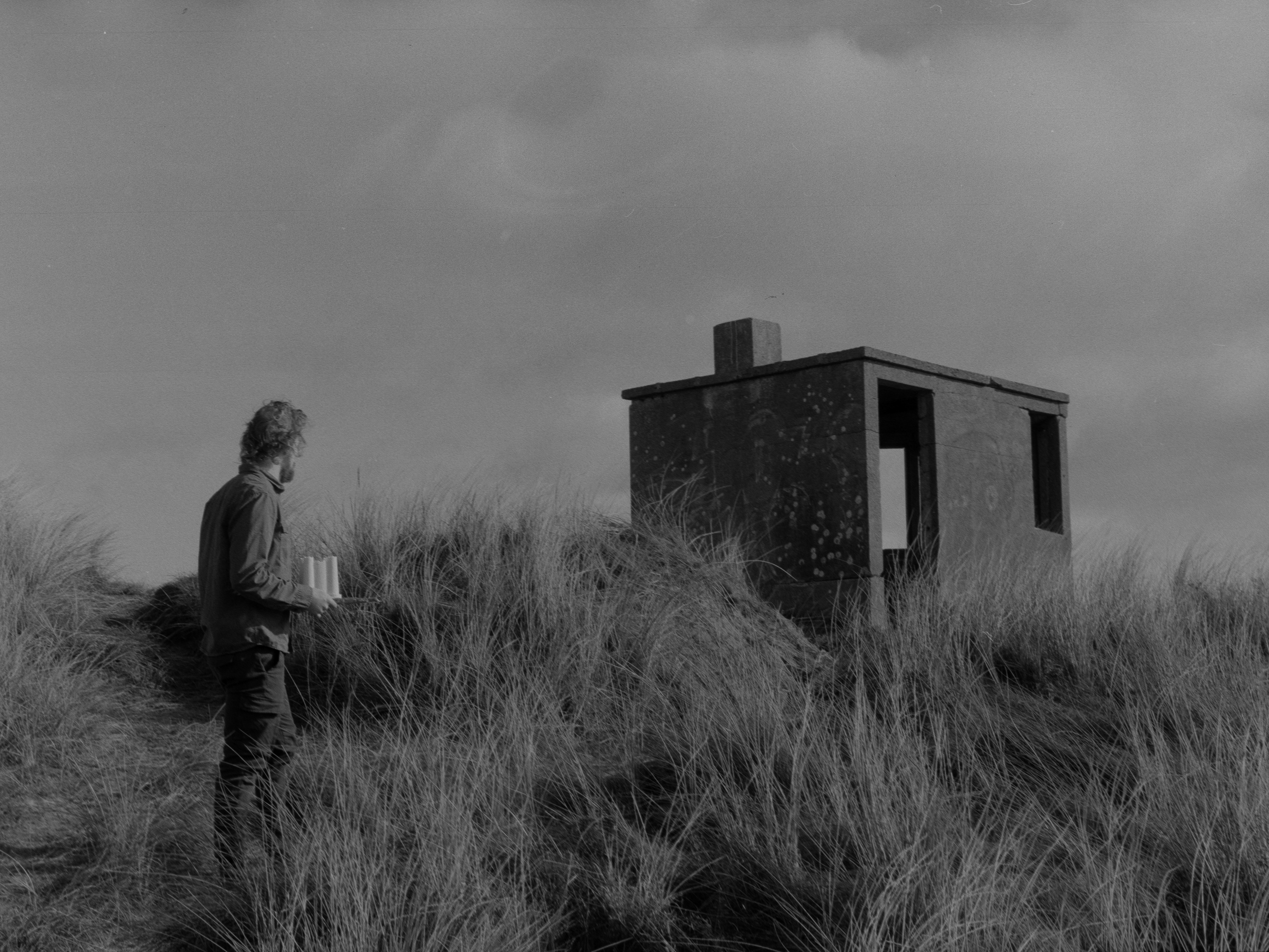
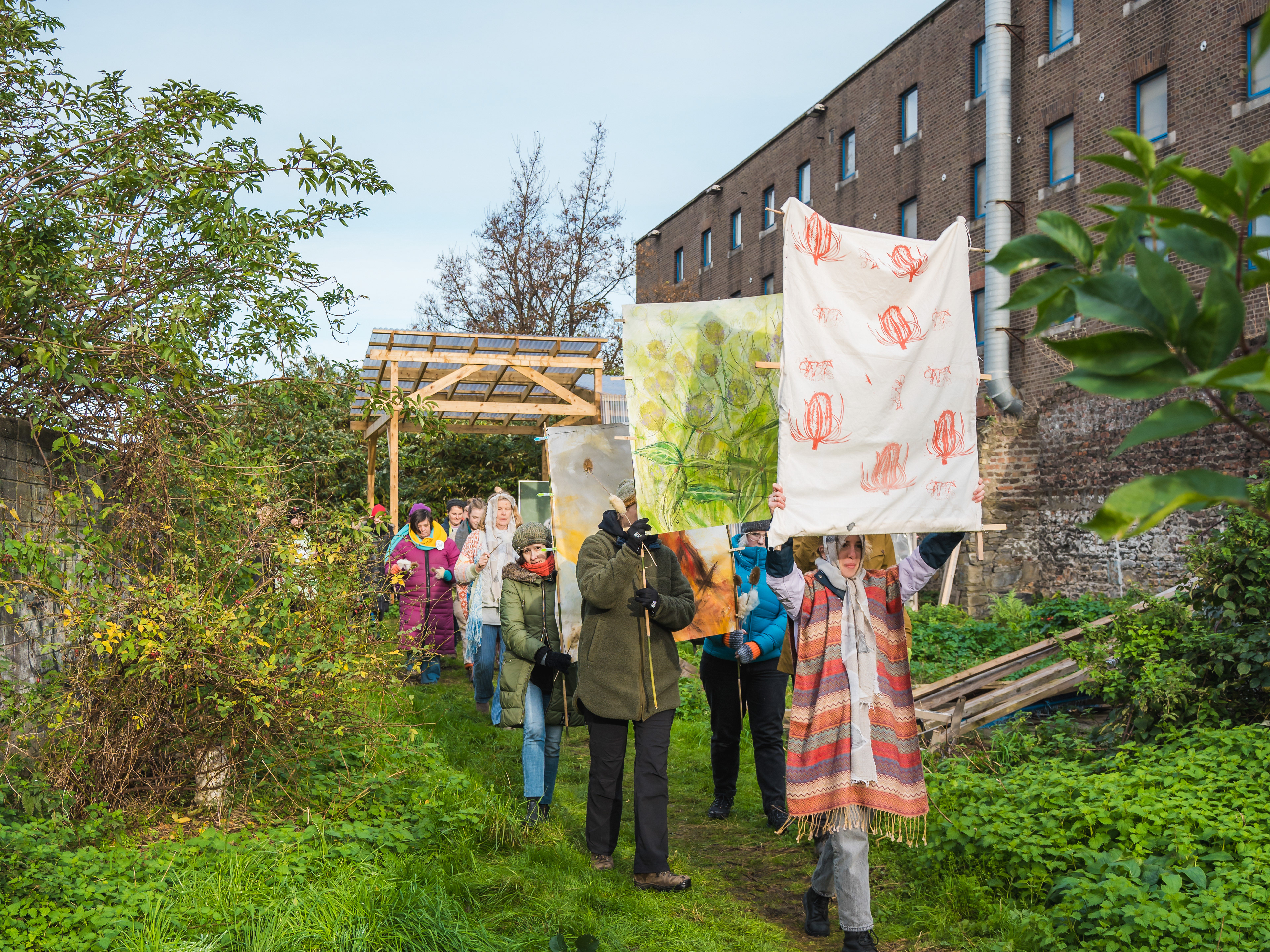
Maria collected the most abundant seaweed species washed ashore after Storm Bram in early December 2024, at the three sites where the Seaweed Wars took place in the late 1800s in Fingal. She drew inspiration from historical practices of gathering seaweed after stormy weather, which was used extensively as a fertiliser. (Washed-up seaweed was known as ‘Woar Wrack’ and the process of gathering it was called ‘Marking’)
Maria wanted to represent the seaweed using photographic and archival processes that were present during the same historical period. In the 1800s herbarium pressing of seaweed specimens was a popular scientific practice and the earliest photographic processes were being developed by William Henry Fox Talbot, whose experiments share similarities with lumen printing. Ink also played a key role in correspondence, with archival records documenting the Seaweed Wars being mainly written in ink.
By combining herbarium practices with lumen printing, the seaweed is not permanently fixed for human observation. Instead, each specimen leaves a temporary imprint on photographic paper before being removed. This positions the seaweed as an active presence rather than a passive object, inviting viewers to reconsider their relationship with it. The work asks us to reimagine the speculative future of seaweed as climate-resilient ecological species, while simultaneously honouring its historical role in sustaining Fingal’s coastal communities.
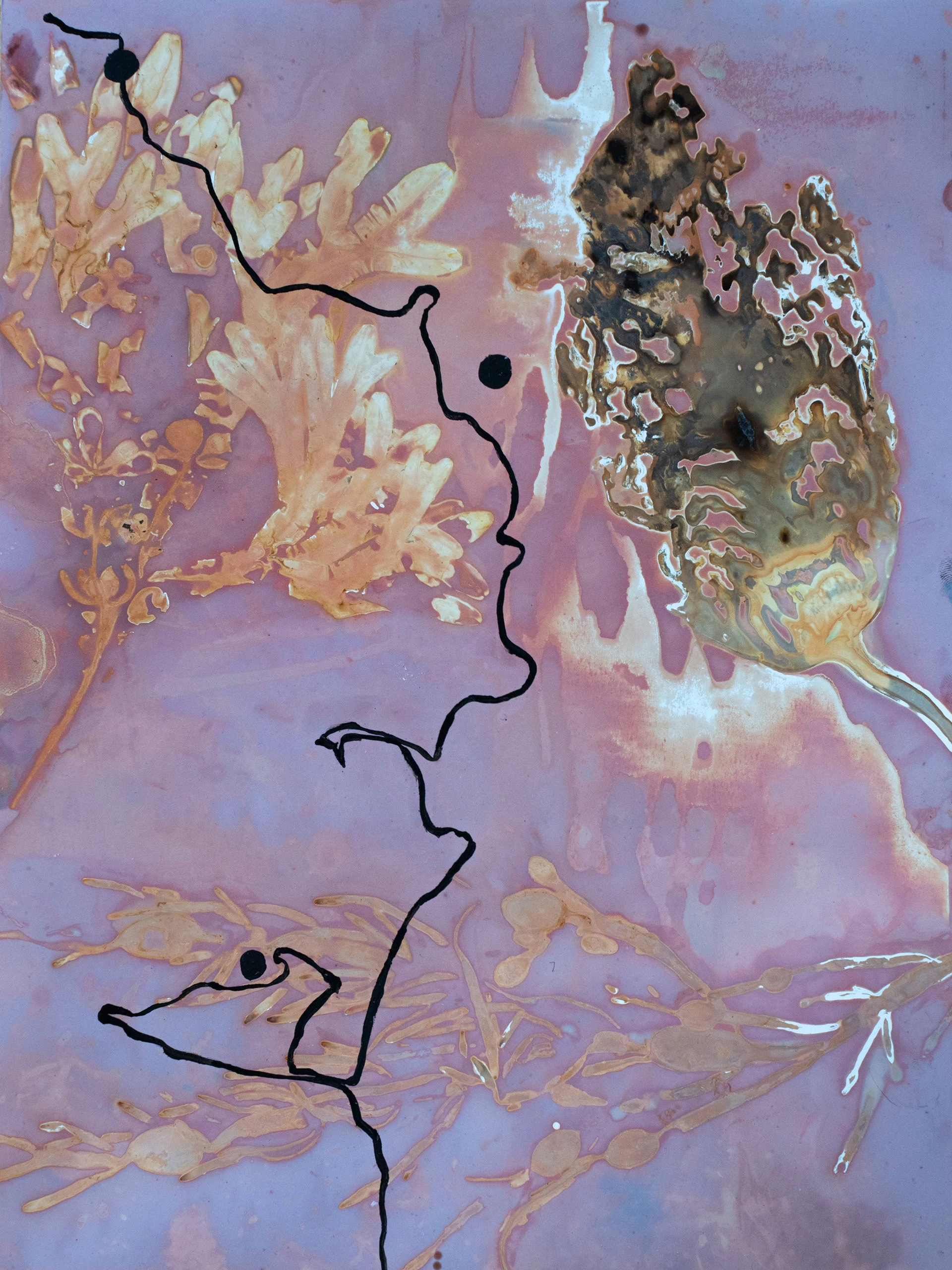
Seaweed herbarium pressed lumen print with charred seaweed ink line drawing of the Fingal coastline.
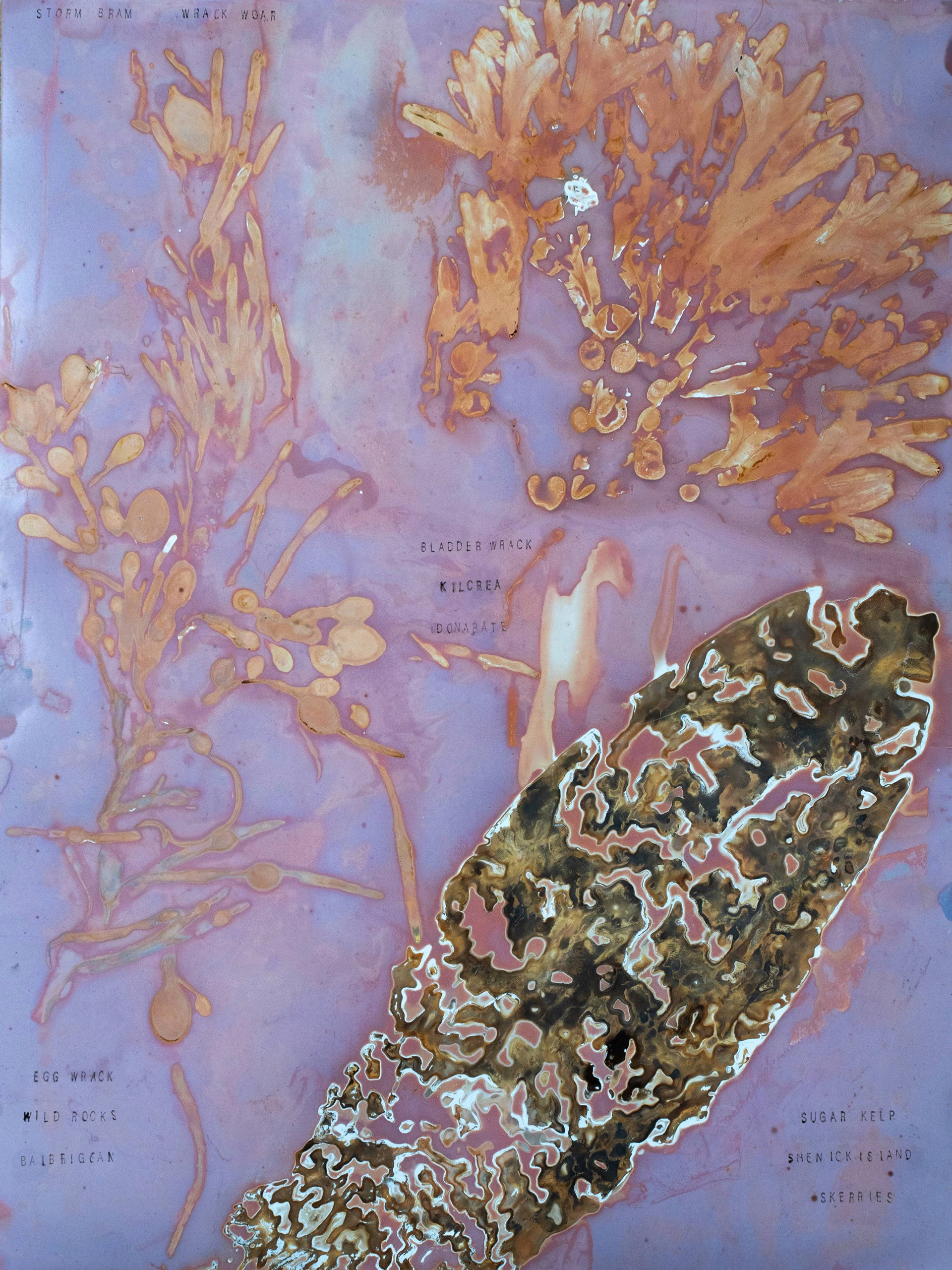
Seaweed herbarium pressed lumen print with charred seaweed ink printed letters.